DentaSonic Review
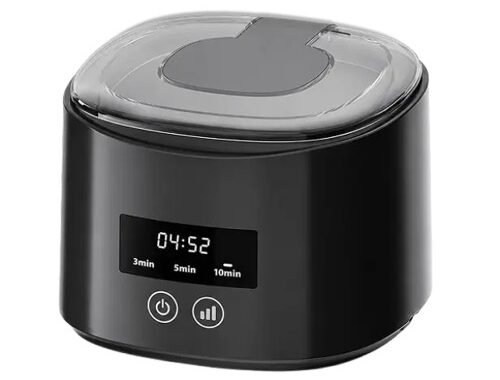
Cleaning retainers, aligners, night guards, and dentures every day can be inconvenient. Food particles, saliva residue, odors, and other buildup can collect in small grooves that are difficult to reach with ordinary brushing.
DentaSonic is a compact ultrasonic cleaner designed to make this job easier. It uses 47 kHz ultrasonic technology to create tiny bubbles in water that help loosen debris from dental appliances.
The device features a 180 ml stainless steel tank, three cleaning cycles, rechargeable operation, and an advertised battery runtime of around 150 minutes.
But does DentaSonic actually offer a practical alternative to manual cleaning? This review examines how it works, its main features, benefits, limitations, customer feedback, safety, and overall value.
What Is DentaSonic?
DentaSonic is an ultrasonic cleaning device primarily designed for removable dental appliances.
Instead of brushing every small area manually, users place their appliance inside the stainless steel tank, add water, and start a cleaning cycle.
The device is promoted for cleaning:
- Retainers
- Clear aligners
- Night guards
- Mouthguards
- Dentures
- Dental partials
- Certain compatible jewelry
DentaSonic uses water and high-frequency ultrasonic vibrations rather than abrasive brushes.
Its compact size also means it can remain on a bathroom counter without taking up much room.
DentaSonic Specifications
The main advertised specifications include:
- 47 kHz ultrasonic frequency
- 180 ml stainless steel cleaning chamber
- 3-minute cleaning mode
- 5-minute cleaning mode
- 10-minute cleaning mode
- Rechargeable battery
- Approximately 150 minutes of total runtime
- Around 50 short cleaning sessions under ideal conditions
- USB charging
- Cordless operation
- Approximately 320 g weight
- Compact, portable construction
Actual battery life may differ depending on the cycle selected, frequency of use, charging habits, and battery condition.
DentaSonic Design and Construction
DentaSonic has a simple design suitable for regular bathroom use.
The outer housing is compact and easy to handle. Inside the device is a stainless steel basin that holds the water and appliance during cleaning.
Stainless steel is commonly used in ultrasonic cleaning machines because it is durable and relatively easy to maintain.
The device also includes a lid to cover the chamber during operation.
Its lightweight construction makes DentaSonic convenient to move around the house or pack for travel.
How Does DentaSonic Work?
DentaSonic works through a process known as ultrasonic cavitation.
An internal transducer creates high-frequency vibrations. These vibrations travel through the water inside the cleaning tank.
This activity creates millions of microscopic bubbles.
The bubbles rapidly form and collapse around the submerged appliance. This process creates a gentle cleaning action that can help loosen particles and surface residue.
One of the advantages of ultrasonic cleaning is its ability to reach narrow grooves, curves, edges, and other areas that can be difficult to reach with a toothbrush.
This makes the technology particularly useful for retainers and aligners with complex shapes.
Does Ultrasonic Cleaning Actually Work?
Ultrasonic cleaning is an established technology used in many consumer and professional applications.
Research into dental appliance cleaning suggests that ultrasonic methods can help with cleaning, although effectiveness depends on the device, cleaning time, appliance material, type of residue, and cleaning solution.
There is also an important limitation.
Plain water may not remove every stain, odor, biofilm, or hardened deposit.
Some research suggests ultrasonic cleaning can perform better when combined with an appropriate cleaning solution rather than water alone.
Users should therefore follow the instructions provided for both DentaSonic and their dental appliance.
How to Use DentaSonic
Using DentaSonic is straightforward.
First, rinse your dental appliance under running water to remove loose particles.
Fill the stainless steel tank with the recommended amount of water.
Place your retainer, aligner, mouthguard, denture, or other compatible appliance inside the chamber.
Close the lid.
Choose the appropriate 3-, 5-, or 10-minute cleaning cycle.
Allow the machine to complete the cycle.
Remove the appliance and rinse it if required.
Finally, empty the water from the tank and wipe the chamber dry.
Leaving dirty standing water inside the machine for long periods should be avoided.
Benefits of DentaSonic
Helps Maintain Cleaner Dental Appliances
Regular ultrasonic cleaning may help remove loose particles and surface residue from frequently worn dental appliances.
Cleans Difficult Areas
Ultrasonic bubbles can reach grooves and narrow spaces that may be difficult to clean manually.
Reduces Manual Scrubbing
The cleaning process does not depend on aggressive brushing.
This can be useful for clear appliances that may become scratched by abrasive cleaning methods.
Helps Reduce Odors
Saliva, food particles, and other residue can contribute to unpleasant smells.
Regular cleaning can help keep an appliance fresher.
May Help Maintain Appearance
Removing everyday buildup may help transparent retainers and aligners maintain a cleaner appearance.
However, the device should not be expected to reverse permanent stains or discoloration.
Simple Daily Routine
Short timed cycles make the cleaner easy to incorporate into a morning or evening routine.
Rechargeable Operation
The rechargeable battery allows cordless use without keeping the device connected to an outlet throughout every cleaning session.
Portable Design
At approximately 320 grams, DentaSonic is light enough for travel.
DentaSonic Pros and Cons
Pros
- Uses 47 kHz ultrasonic technology
- 180 ml stainless steel tank
- Three cleaning-cycle options
- Easy one-button-style operation
- No manual scrubbing during cleaning
- Rechargeable battery
- Cordless design
- Compact and lightweight
- Suitable for several dental appliances
- Helps reach narrow spaces
- Convenient for regular cleaning
- Portable enough for travel
Cons
- Water alone may not remove every deposit
- Hardened buildup may require additional cleaning
- Not every appliance is compatible with every cleaning solution
- Not all jewelry can be safely cleaned ultrasonically
- Independent customer feedback appears limited
- Results depend on the type and age of the buildup
DentaSonic Customer Reviews
Customer feedback about DentaSonic generally focuses on convenience and ease of use.
Some users like being able to place a retainer or aligner inside the machine and allow it to clean while they complete another part of their morning routine.
Others appreciate the compact size because the device can remain next to a bathroom sink without occupying much space.
Users of dental partials and other appliances have also described ultrasonic cleaning as helpful for reaching small spaces.
However, older stains and hardened deposits may not disappear after a single cleaning session.
Customer testimonials should be considered personal experiences rather than guaranteed results.
Can DentaSonic Clean Clear Aligners?
DentaSonic is marketed for clear aligners and retainers.
Ultrasonic cleaning has an advantage over abrasive brushing because the cleaning action occurs through vibrations in water.
However, users should always follow the cleaning instructions supplied by the aligner manufacturer or orthodontist.
Avoid very hot water unless specifically permitted because heat can distort certain thermoplastic dental appliances.
Can You Use Cleaning Tablets?
Potentially, but only when the product is compatible.
Do not automatically add bleach, alcohol, toothpaste, household cleaners, strong mouthwash, or other chemicals to the DentaSonic tank.
If you want to use a cleaning tablet or solution, make sure it is safe for both the ultrasonic cleaner and the dental appliance.
Using an appropriate cleanser may improve cleaning results compared with water alone in some situations.
Can DentaSonic Remove Hardened Tartar?
Ultrasonic cleaning can help loosen certain deposits, but consumers should not expect DentaSonic to completely remove hardened tartar or heavily mineralized buildup.
Persistent deposits may require a different appliance-safe cleaning method.
If you are unsure how to clean stubborn buildup, ask your dentist or orthodontist.
Can You Clean Jewelry With DentaSonic?
Some jewelry may be suitable for ultrasonic cleaning.
However, certain gemstones, glued settings, antique pieces, plated finishes, and delicate materials can be damaged.
Always check whether a particular item is suitable before putting it into an ultrasonic cleaner.
DentaSonic Battery Life
DentaSonic is advertised with approximately 150 minutes of operating time.
Using only the three-minute mode could theoretically provide around 50 cleaning sessions under ideal conditions.
Longer cycles will naturally reduce the number of sessions available between charges.
Actual battery performance can also decline over time.
How to Maintain DentaSonic
Proper maintenance can help keep the cleaner in good condition.
After each use:
- Turn off the machine.
- Remove the appliance.
- Empty the used water.
- Wipe the stainless steel chamber with a soft cloth.
- Allow the tank to dry.
- Keep the electrical base away from excessive water.
Never immerse the entire electrical unit in water.
Where to Buy DentaSonic
DentaSonic is primarily promoted through its authorized online sales channel.
Buying from the authorized seller allows customers to check current prices, available packages, shipping terms, warranty information, and return conditions.
Consumers should be careful with unusually cheap copies sold through unfamiliar sellers.
Always review the complete checkout price before placing an order.
DentaSonic Return Policy and Warranty
DentaSonic is promoted with a satisfaction guarantee or return policy.
Before buying, read the current terms carefully.
Important details include the length of the return period, whether used products qualify, whether original packaging is necessary, who pays return shipping, and whether authorization is required before sending the device back.
Keep your order confirmation until the guarantee period has ended.
Is DentaSonic Legit or a Scam?
The cleaning principle behind DentaSonic is legitimate.
Ultrasonic cavitation has been used for many years in professional and consumer cleaning applications.
DentaSonic also has practical specifications, including a 47 kHz ultrasonic frequency, stainless steel chamber, multiple timed cycles, and rechargeable operation.
However, a legitimate technology does not automatically prove that every device using it has the same quality or durability.
Independent information about DentaSonic and the company behind it appears more limited than for some established dental-care brands.
For this reason, consumers should pay attention to the seller’s warranty, refund terms, contact information, and payment protections.
Frequently Asked Questions
What is DentaSonic?
DentaSonic is a compact ultrasonic cleaner designed for retainers, aligners, mouthguards, night guards, dentures, and other compatible small items.
What frequency does DentaSonic use?
The advertised ultrasonic frequency is 47 kHz.
What is the tank capacity?
The stainless steel chamber holds approximately 180 ml.
What cleaning cycles are available?
DentaSonic provides 3-, 5-, and 10-minute cleaning options.
Can I clean my retainer every day?
Daily cleaning is common for removable dental appliances. Follow your dentist, orthodontist, or appliance manufacturer’s instructions.
Does DentaSonic scratch aligners?
Ultrasonic cleaning does not rely on abrasive brushing. However, users should still follow the appliance manufacturer’s cleaning guidance.
Can I use ordinary tap water?
Plain water may be suitable for routine cleaning when allowed by the instructions. However, water alone may not remove all residue or buildup.
Can cleaning tablets be added?
Only use tablets or solutions that are confirmed to be compatible with both DentaSonic and the dental appliance.
Does DentaSonic heat the water?
Ultrasonic operation can produce some heat. Avoid using excessively hot water with heat-sensitive dental appliances.
Can DentaSonic clean dentures?
It is promoted for dentures, but compatibility should be confirmed for the specific material and construction of the denture.
Does DentaSonic remove tartar?
It may help loosen some buildup, but hardened deposits may require additional cleaning or professional advice.
Is DentaSonic rechargeable?
Yes. It is advertised as a rechargeable cordless cleaner.
How long does the battery last?
The advertised total runtime is approximately 150 minutes, although actual performance can vary.
Can DentaSonic clean jewelry?
Certain jewelry may be suitable, but delicate stones, glued pieces, plated surfaces, and other sensitive materials may not be safe for ultrasonic cleaning.
Where can I buy DentaSonic?
DentaSonic is primarily available through its authorized online purchasing channel.
Final Verdict: Is DentaSonic Worth Buying?
DentaSonic provides a convenient way to maintain retainers, aligners, mouthguards, night guards, and other compatible dental appliances.
Its main advantage is the cleaning technology. The 47 kHz ultrasonic system creates microscopic cavitation bubbles that can reach areas that may be difficult to clean manually.
The 180 ml stainless steel chamber, three timed cleaning modes, rechargeable battery, and portable design also make the device practical for regular use.
However, consumers should maintain realistic expectations.
DentaSonic may help with routine residue and debris, but it should not be expected to remove every stain, hardened deposit, or long-standing discoloration. An appropriate appliance-safe cleanser may also improve results compared with water alone.
Overall, DentaSonic appears most useful for people who wear removable dental appliances every day and want a convenient alternative to frequent manual scrubbing. Its combination of ultrasonic cleaning, short cycles, and cordless operation makes it a practical daily maintenance device.

Suraj Health is a fitness freak & a gym trainer by profession. Apart from his bodybuilding obsession he loves to write & share his personal experience about his weight loss & Fitness journey. Having over 20+ years of experience in bodybuilding, helped many individuals to get jacked by different steroid cycle. (Read More) You can connect with him on Linkedin.