Katori Pure Titanium Cutting Board Review
Take a close look at an old plastic cutting board.
Those knife marks aren’t just cosmetic.
After months of chopping, slicing, and preparing food, plastic boards can become covered with cuts that make them harder to keep clean. Wooden boards have a different issue—they need more careful cleaning, drying, and maintenance.
That’s why the Katori Pure Titanium Cutting Board caught our attention.
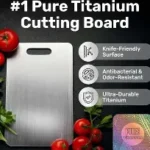
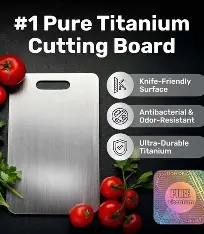
Instead of plastic, bamboo, or wood, Katori is marketed as using a titanium food-preparation surface designed to be non-porous, corrosion resistant, easy to wash, and considerably more durable than a typical cutting board.
Sounds impressive.
But there’s an obvious question:
Do you really need a titanium cutting board?
Katori Cutting Board at a Glance
Editor’s Rating: ★★★★☆ 4.3/5
Product: Katori Pure Titanium Cutting Board
Type: Metal Kitchen Cutting Board
Material: Titanium construction claimed
Surface: Brushed metal
Thickness: Approximately 2mm according to supplied information
Cleaning: Dishwasher-safe claimed
Best For: Easy-clean food preparation
Price Range: Approximately $89–$179 in the supplied reference
Main Drawback: Higher price and harder cutting surface
Why are people moving away from plastic cutting boards?
Plastic boards are cheap and convenient.
But eventually your knife leaves marks.
Those scratches become deeper with repeated use, and heavily worn boards become increasingly difficult to clean properly.
There’s another concern that has received increasing attention: microplastic release from plastic cutting boards during chopping.
That doesn’t automatically make every plastic cutting board dangerous, but it’s a reasonable reason some buyers are exploring non-plastic alternatives.
Wood solves the plastic problem, but introduces its own maintenance requirements.
A good wooden cutting board needs appropriate washing, drying, and—in many cases—periodic oiling.
Katori tries to offer a third option:
a durable metal preparation surface that’s simple to wash and doesn’t contain plastic.
What is the Katori Pure Titanium Cutting Board?
Katori is marketed as a titanium cutting board intended to replace conventional plastic, bamboo, glass, and wooden prep boards.
The supplied material describes a brushed titanium surface approximately 2mm thick, with rounded edges and a relatively lightweight construction.
Its biggest attraction is the material itself.
Titanium is corrosion resistant and non-porous.
That means you’re not dealing with the same kind of absorbent surface associated with wood or the plastic surface of a conventional cutting board.
It should also be considerably more resistant to cracking and warping than many traditional boards.

The biggest advantage: cleaning
This is where a metal preparation board becomes appealing.
Cut onions?
Wash it.
Prepared fish?
Wash it.
Sliced tomatoes?
Wash it.
Handled raw meat?
Clean and sanitize it appropriately.
There’s no board oil to apply and no wooden surface that needs to be carefully dried to prevent swelling or warping.
The supplied Katori information also describes the board as dishwasher-safe.
That low-maintenance routine is probably the strongest argument for buying one.
But is it really “bacteria-proof”?
I’d be careful with that wording.
A non-porous surface has a meaningful hygiene advantage because liquids and food residue don’t absorb into the material itself.
But non-porous doesn’t mean self-sanitizing.
Bacteria can still be present on a dirty surface.
If you’ve just prepared raw chicken, you still need to properly wash and sanitize the board.
The titanium doesn’t magically clean itself.
So I’d describe Katori as:
Non-porous and easy to clean—not bacteria-proof.
That’s a more useful distinction.
What about odors?
This is another area where titanium has an attractive practical advantage.
A non-porous metal surface shouldn’t absorb onion, garlic, fish, or meat juices the way an absorbent material potentially can.
That can be particularly useful if you prepare lots of strongly flavored ingredients.
Clean the board properly between foods and you’re starting again with a non-absorbent preparation surface.
Will a titanium cutting board dull your knives?
This is the biggest question I’d ask before buying Katori.
And I’d be more cautious here than the marketing material.
Any cutting surface interacts with your knife edge.
Wood—especially quality end-grain wood—is popular among knife enthusiasts partly because it provides a relatively forgiving cutting surface.
Titanium is still metal.
The supplied reference argues that titanium is less aggressive on knife edges than harder metal surfaces and claims favorable knife retention.
But that doesn’t mean it will necessarily be as gentle on your favorite chef’s knife as a good wooden board.
If you own expensive Japanese knives or spend considerable time maintaining extremely fine edges, this is something I’d consider carefully.
For general kitchen knives, the tradeoff may be acceptable if easy cleaning and durability matter more to you.
Does the board scratch?
Expect some surface marks.
You’re repeatedly dragging sharp metal across another material.
Keeping a titanium board perfectly showroom-new isn’t a realistic expectation.
The supplied reference itself says long-term users report light surface scratching with use.
That’s not necessarily a functional problem.
Think of those marks as normal wear rather than automatically assuming the board has failed.
One problem: it may slide
This is a surprisingly important detail.
The supplied material says the Katori board doesn’t necessarily include a built-in non-slip backing.
On a smooth granite, quartz, marble, or polished countertop, a metal board may move while you’re chopping.
That’s not something I’d ignore.
Fortunately, the solution is simple.
Place a proper non-slip silicone mat underneath it.
The reference itself recommends this approach for smooth countertops.
I’d consider a non-slip base essential rather than optional when doing vigorous chopping.
Editor’s Verdict
★★★★☆ 4.3/5
The Katori Pure Titanium Cutting Board has a compelling idea behind it.
You get a non-porous preparation surface that doesn’t contain plastic, doesn’t require wood oil, resists corrosion, and should be relatively easy to clean.
But titanium isn’t automatically the perfect cutting-board material.
It’s expensive.
It’s harder than wood.
It may slide without a proper mat.
And the supplied reference doesn’t provide public laboratory documentation verifying Katori’s exact titanium purity claim.
Those considerations keep it from receiving a perfect rating.
For someone prioritizing easy cleaning, durability, and avoiding plastic cutting surfaces, however, Katori is an interesting premium option.
What We Liked
- Non-porous metal surface
- No plastic cutting surface
- Corrosion-resistant material
- Doesn’t require wood oil
- Easy-clean concept
- Dishwasher-safe according to supplied information
- Resistant to absorbing food odors
- Thin construction
- Rounded edges listed
- Resistant to cracking
- Resistant to warping
- Potentially very long usable life
What to Keep in Mind
- Much more expensive than ordinary boards
- Harder surface than wood
- Knife-edge wear deserves consideration
- Surface scratches should be expected
- Can slide on smooth countertops
- Non-slip mat may be necessary
- Metal chopping sound won’t appeal to everyone
- “Pure titanium” claim isn’t independently verified in the supplied material
- Non-porous doesn’t mean self-sanitizing
Katori vs. a Wooden Cutting Board
Katori Titanium
Non-porous.
No oiling.
Corrosion resistant.
Doesn’t absorb water like wood.
Easy to rinse.
Metallic feel and sound.
Higher initial cost.
Harder cutting surface.
Wood
Warm, traditional appearance.
Usually more forgiving to knife edges.
Can last many years when properly maintained.
Requires more careful washing and drying.
Some boards need periodic oiling.
Can warp or crack if neglected.
Neither is automatically better.
If you’re serious about expensive knives, you may prefer quality wood.
If you prioritize minimal maintenance and a non-porous surface, Katori becomes more attractive.
Katori vs. Plastic Cutting Boards
This comparison is easier.
Plastic wins on price.
You can buy a decent plastic board very cheaply.
Katori wins on durability and avoids having a plastic cutting surface.
Plastic boards eventually develop knife marks and need replacing when they become excessively worn.
Titanium will also develop cosmetic marks, but it’s unlikely to wear in exactly the same way as a conventional plastic board.
The question is whether that difference is worth paying considerably more upfront.
Katori vs. Glass
I’d choose Katori.
Glass cutting boards are extremely hard on knife edges.
They’re also noisy and can feel unpleasant during chopping.
A titanium surface is still harder than wood, but it makes more sense as a working cutting surface than glass.
Is Katori really made from pure titanium?
The supplied reference describes Katori as a pure titanium cutting board.
However, the same reference acknowledges an important limitation: Katori’s purity claims aren’t currently supported there by publicly posted testing documentation.
So I wouldn’t independently claim a specific titanium grade or percentage without seeing manufacturer documentation or third-party material testing.
That’s particularly important when buyers are paying a premium specifically because of the material.
Is titanium safe for food preparation?
Titanium is widely valued for corrosion resistance and chemical stability.
But for this specific product, buyers should distinguish the general properties of titanium from independently verifying the exact composition and food-contact compliance of the finished Katori board.
If material purity is your main reason for buying it, look for documentation covering the actual product—not simply general statements about titanium.
How to clean Katori
For everyday vegetable and fruit preparation, wash the surface with appropriate dish soap and water and dry it.
After handling raw meat, poultry, or seafood, clean and sanitize it appropriately before using it for ready-to-eat foods.
The supplied instructions also describe the board as dishwasher-safe.
Avoid abrasive steel wool if you want to preserve the brushed appearance.
And remember:
A non-porous surface still needs to be washed.
How much does Katori cost?
The supplied reference places Katori boards at approximately $89 to $179, depending on board size, promotion, and purchase channel.
That’s premium cutting-board territory.
Whether it’s worth paying that much depends on how you cook.
Someone preparing food once or twice a week probably doesn’t need it.
Someone cooking multiple meals every day and constantly replacing worn plastic boards may see more value.
Confirm current size, material specifications, included accessories, warranty, return policy, and final price before ordering.
Who should consider Katori?
Katori makes the most sense if you:
- Cook frequently
- Want to avoid plastic cutting surfaces
- Prefer a non-porous board
- Want something easy to wash
- Don’t want to maintain a wooden board
- Frequently prepare strongly scented ingredients
- Want a corrosion-resistant preparation surface
- Value durability over low upfront price
- Don’t mind using a non-slip mat
Who should skip it?
I’d probably choose something else if:
- You want the cheapest possible board
- You strongly prefer wooden cutting surfaces
- Protecting expensive knife edges is your top priority
- You dislike the feel or sound of cutting on metal
- You want a lightweight flexible board
- You don’t cook often enough to justify the premium price
Frequently Asked Questions
What is the Katori Pure Titanium Cutting Board?
It’s a metal food-preparation board marketed as using a titanium cutting surface instead of conventional plastic, wood, bamboo, or glass.
Is Katori really 100% pure titanium?
The supplied reference describes it as pure titanium, but also acknowledges that Katori doesn’t currently provide publicly posted test results there supporting its purity claim.
I’d verify material documentation before treating a particular titanium grade or percentage as established.
Is Katori non-porous?
Titanium itself is a non-porous metal. The practical characteristics of the finished board also depend on its actual construction and surface.
Is it antibacterial?
I wouldn’t call it antibacterial or bacteria-proof without specific testing.
A non-porous surface can be easier to clean because food residue doesn’t absorb into the material, but the board still needs normal washing and sanitizing.
Does Katori contain microplastics?
If the food-contact cutting surface is genuinely titanium as claimed, it isn’t a plastic cutting surface.
Verifying the actual product composition remains important.
Will Katori dull knives?
Every cutting surface affects knife edges differently.
Titanium is harder than wood, so knife-conscious cooks should consider that tradeoff. I wouldn’t promise that it causes zero additional edge wear.
Can Katori go in the dishwasher?
The supplied information describes it as dishwasher-safe.
Does it absorb food smells?
A non-porous titanium surface shouldn’t absorb odors in the way porous materials can, although food residue left on any dirty surface can smell.
Can I cut meat on it?
It’s marketed for meat and other food preparation. As with any cutting board, clean and sanitize it properly after handling raw meat and avoid cross-contamination.
Can I put hot pans on Katori?
The source promotes heat resistance, but I’d follow the actual manufacturer’s temperature and care guidance rather than treating the board as an unrestricted trivet.
Does Katori scratch?
Yes, cosmetic scratching should be expected with regular knife use.
Does it slide?
The supplied customer-feedback section says sliding can occur on smooth countertops. A suitable non-slip mat underneath is a sensible solution.
Is it better than wood?
Not for everyone.
Wood is generally attractive to knife-conscious cooks, while titanium offers a non-porous, lower-maintenance surface.
Is it better than plastic?
Katori avoids a plastic cutting surface and is positioned as much more durable, but plastic is substantially cheaper.
How long should Katori last?
Titanium is highly durable, but I wouldn’t promise a literal lifetime without verified product-specific durability testing and warranty details.
Is the Katori Pure Titanium Cutting Board Worth It?
It can be—if you understand what you’re paying for.
You’re not buying Katori because it chops vegetables better.
Your knife does that.
You’re paying for the surface underneath the knife.
A non-porous metal surface.
No plastic.
No wood oiling.
High corrosion resistance.
Simple cleaning.
And potentially much longer service life than an inexpensive board.
The tradeoff is a higher price and a harder cutting surface.
For someone who cooks every day and wants to move away from plastic without maintaining wood, Katori is an interesting premium alternative.
For someone who owns expensive knives and loves the feel of a quality end-grain wooden board?
I’d think carefully before switching.
Editor’s Rating: 4.3/5
Compare available sizes, material documentation, warranty terms, and current pricing before purchasing.

Suraj Health is a fitness freak & a gym trainer by profession. Apart from his bodybuilding obsession he loves to write & share his personal experience about his weight loss & Fitness journey. Having over 20+ years of experience in bodybuilding, helped many individuals to get jacked by different steroid cycle. (Read More) You can connect with him on Linkedin.
-
Suraj Health
-
Suraj Health
-
Suraj Health
-
Suraj Health
-
Suraj Health
-
Suraj Health
-
Suraj Health
-
Suraj Health
-
Suraj Health
-
Suraj Health
-
Suraj Health
-
Suraj Health
-
Suraj Health
-
Suraj Health
-
Suraj Health
-
Suraj Health
-
Suraj Health
-
Suraj Health
-
Suraj Health
-
Suraj Health
-
Suraj Health
-
Suraj Health
-
Suraj Health
-
Suraj Health
-
Suraj Health
-
Suraj Health
-
Suraj Health
-
Suraj Health
-
Suraj Health
-
Suraj Health
-
Suraj Health
-
Suraj Health
-
Suraj Health
-
Suraj Health
-
Suraj Health
-
Suraj Health
-
Suraj Health
-
Suraj Health
-
Suraj Health
-
Suraj Health
-
Suraj Health
-
Suraj Health
-
Suraj Health
-
Suraj Health
-
Suraj Health
-
Suraj Health
-
Suraj Health
-
Suraj Health
-
Suraj Health
-
Suraj Health
-
Suraj Health
-
Suraj Health
-
Suraj Health
-
Suraj Health
-
Suraj Health
-
Suraj Health
-
Suraj Health
-
Suraj Health
-
Suraj Health
-
Suraj Health
-
Suraj Health
-
Suraj Health
-
Suraj Health
-
Suraj Health
-
Suraj Health
-
Suraj Health
-
Suraj Health
-
Suraj Health
-
Suraj Health
-
Suraj Health
-
Suraj Health
-
Suraj Health
-
Suraj Health
-
Suraj Health
-
Suraj Health
-
Suraj Health
-
Suraj Health
-
Suraj Health
-
Suraj Health
-
Suraj Health
-
Suraj Health
-
Suraj Health
-
Suraj Health
-
Suraj Health
-
Suraj Health
-
Suraj Health
-
Suraj Health
-
Suraj Health
-
Suraj Health
-
Suraj Health
-
Suraj Health
-
Suraj Health
-
Suraj Health
-
Suraj Health
-
Suraj Health
-
Suraj Health
-
Suraj Health
-
Suraj Health
-
Suraj Health
-
Suraj Health
-
Suraj Health
-
Suraj Health
-
Suraj Health

Erica Mesirov is a registered dietitian and nutrition expert based in San Diego, California. She holds a Master's degree in Nutrition and Dietetics and has over a decade of experience in the health and wellness industry. Erica is passionate about empowering individuals to achieve optimal health through proper nutrition and lifestyle habits. Her approach to nutrition is personalized, taking into account each individual's unique needs and goals. Erica has been featured in various media outlets and is a sought-after speaker on topics related to nutrition and wellness.
-
Mrs. Mesirov Erica
-
Mrs. Mesirov Erica
-
Mrs. Mesirov Erica
-
Mrs. Mesirov Erica
-
Mrs. Mesirov Erica
-
Mrs. Mesirov Erica
-
Mrs. Mesirov Erica
-
Mrs. Mesirov Erica
-
Mrs. Mesirov Erica
-
Mrs. Mesirov Erica
-
Mrs. Mesirov Erica
-
Mrs. Mesirov Erica
-
Mrs. Mesirov Erica
-
Mrs. Mesirov Erica
-
Mrs. Mesirov Erica
-
Mrs. Mesirov Erica
-
Mrs. Mesirov Erica
-
Mrs. Mesirov Erica
-
Mrs. Mesirov Erica
-
Mrs. Mesirov Erica
-
Mrs. Mesirov Erica
-
Mrs. Mesirov Erica
-
Mrs. Mesirov Erica
-
Mrs. Mesirov Erica
-
Mrs. Mesirov Erica
-
Mrs. Mesirov Erica
-
Mrs. Mesirov Erica
-
Mrs. Mesirov Erica
-
Mrs. Mesirov Erica
-
Mrs. Mesirov Erica
-
Mrs. Mesirov Erica
-
Mrs. Mesirov Erica
-
Mrs. Mesirov Erica
-
Mrs. Mesirov Erica
-
Mrs. Mesirov Erica
-
Mrs. Mesirov Erica
-
Mrs. Mesirov Erica
-
Mrs. Mesirov Erica
-
Mrs. Mesirov Erica
-
Mrs. Mesirov Erica
-
Mrs. Mesirov Erica
-
Mrs. Mesirov Erica
-
Mrs. Mesirov Erica
-
Mrs. Mesirov Erica
-
Mrs. Mesirov Erica
-
Mrs. Mesirov Erica
-
Mrs. Mesirov Erica
-
Mrs. Mesirov Erica
-
Mrs. Mesirov Erica
-
Mrs. Mesirov Erica
-
Mrs. Mesirov Erica
-
Mrs. Mesirov Erica
-
Mrs. Mesirov Erica
-
Mrs. Mesirov Erica
-
Mrs. Mesirov Erica
-
Mrs. Mesirov Erica
-
Mrs. Mesirov Erica
-
Mrs. Mesirov Erica
-
Mrs. Mesirov Erica
-
Mrs. Mesirov Erica
-
Mrs. Mesirov Erica
-
Mrs. Mesirov Erica
-
Mrs. Mesirov Erica
-
Mrs. Mesirov Erica
-
Mrs. Mesirov Erica
-
Mrs. Mesirov Erica
-
Mrs. Mesirov Erica
-
Mrs. Mesirov Erica
-
Mrs. Mesirov Erica
-
Mrs. Mesirov Erica
-
Mrs. Mesirov Erica
-
Mrs. Mesirov Erica
-
Mrs. Mesirov Erica
-
Mrs. Mesirov Erica
-
Mrs. Mesirov Erica
-
Mrs. Mesirov Erica
-
Mrs. Mesirov Erica
-
Mrs. Mesirov Erica
-
Mrs. Mesirov Erica
-
Mrs. Mesirov Erica
-
Mrs. Mesirov Erica
-
Mrs. Mesirov Erica
-
Mrs. Mesirov Erica
-
Mrs. Mesirov Erica
-
Mrs. Mesirov Erica
-
Mrs. Mesirov Erica
-
Mrs. Mesirov Erica
-
Mrs. Mesirov Erica
-
Mrs. Mesirov Erica
-
Mrs. Mesirov Erica
-
Mrs. Mesirov Erica
-
Mrs. Mesirov Erica
-
Mrs. Mesirov Erica
-
Mrs. Mesirov Erica
-
Mrs. Mesirov Erica
-
Mrs. Mesirov Erica
-
Mrs. Mesirov Erica
-
Mrs. Mesirov Erica
-
Mrs. Mesirov Erica
-
Mrs. Mesirov Erica
-
Mrs. Mesirov Erica
-
Mrs. Mesirov Erica
-
Mrs. Mesirov Erica
-
Mrs. Mesirov Erica
-
Mrs. Mesirov Erica
-
Mrs. Mesirov Erica
-
Mrs. Mesirov Erica
-
Mrs. Mesirov Erica
-
Mrs. Mesirov Erica
-
Mrs. Mesirov Erica
-
Mrs. Mesirov Erica
-
Mrs. Mesirov Erica
-
Mrs. Mesirov Erica
-
Mrs. Mesirov Erica
-
Mrs. Mesirov Erica
-
Mrs. Mesirov Erica
-
Mrs. Mesirov Erica
-
Mrs. Mesirov Erica
-
Mrs. Mesirov Erica
-
Mrs. Mesirov Erica
-
Mrs. Mesirov Erica
-
Mrs. Mesirov Erica
-
Mrs. Mesirov Erica
-
Mrs. Mesirov Erica
-
Mrs. Mesirov Erica
-
Mrs. Mesirov Erica
-
Mrs. Mesirov Erica
-
Mrs. Mesirov Erica
-
Mrs. Mesirov Erica
-
Mrs. Mesirov Erica
-
Mrs. Mesirov Erica
-
Mrs. Mesirov Erica
-
Mrs. Mesirov Erica
-
Mrs. Mesirov Erica
-
Mrs. Mesirov Erica
-
Mrs. Mesirov Erica
-
Mrs. Mesirov Erica
-
Mrs. Mesirov Erica
-
Mrs. Mesirov Erica
-
Mrs. Mesirov Erica
-
Mrs. Mesirov Erica
-
Mrs. Mesirov Erica
-
Mrs. Mesirov Erica
-
Mrs. Mesirov Erica
-
Mrs. Mesirov Erica
-
Mrs. Mesirov Erica
-
Mrs. Mesirov Erica
-
Mrs. Mesirov Erica
-
Mrs. Mesirov Erica
-
Mrs. Mesirov Erica
-
Mrs. Mesirov Erica
-
Mrs. Mesirov Erica
-
Mrs. Mesirov Erica
-
Mrs. Mesirov Erica
-
Mrs. Mesirov Erica